A Polish Journey began as an exploration into the creative and narrative possibilities of the web documentary form. The project set out to balance two distinct modes of engagement often discussed in interactive documentary theory: the cinematic, lean-back experience of watching a story unfold, and the lean-forward mode in which users actively navigate, explore, and make meaning through interaction.
Drawing inspiration from early landmark works that brought a filmic sensibility to web-based storytelling, the challenge was to design a narrative architecture capable of supporting both. The core documentary needed to deliver a complete, emotionally coherent story arc for conventional linear viewing, while the surrounding interface would invite newer audiences to explore a more atomised, database-driven layer of content.
As the narrative developed, the piece was structured into seven chapters – echoing the “seven ages of man.” This framework aligned intuitively with the project’s intergenerational story of movement and migration, providing a dramaturgical spine and a clear navigational logic for users.
The interface is organised along a vertical axis, offering two complementary modes of deeper engagement. One side allows users to delve into historical reference points, providing contextual grounding that connects the personal story to broader shared experiences. The opposite side offers a more immersive extension of the journey, including a photojournal and field recordings captured during production. Together, these layers form a hybrid narrative space- part linear film, part exploratory documentary – demonstrating how interactive design can expand a story’s meaning and resonance.
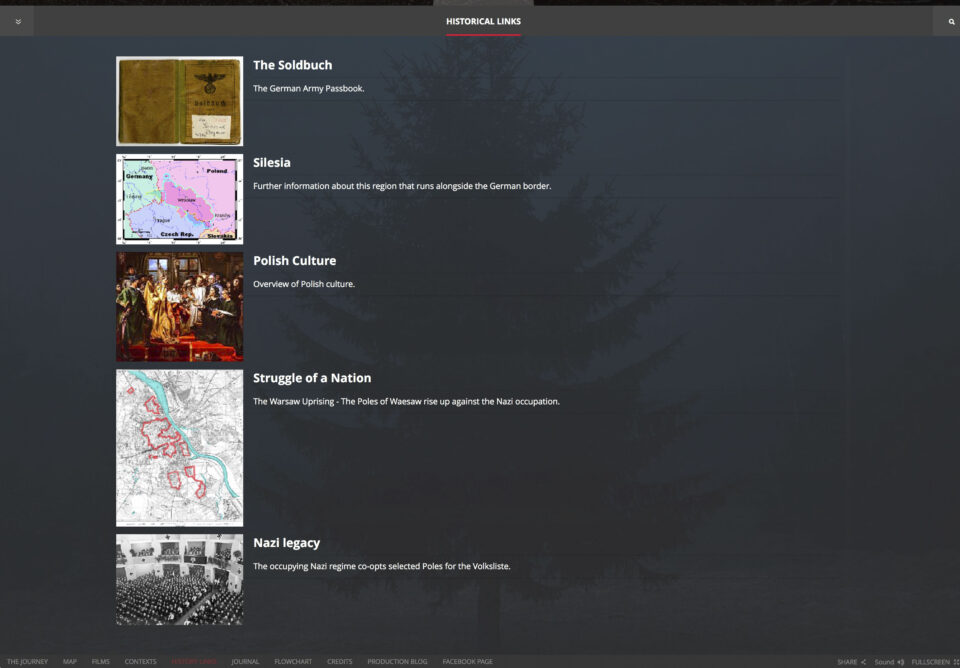
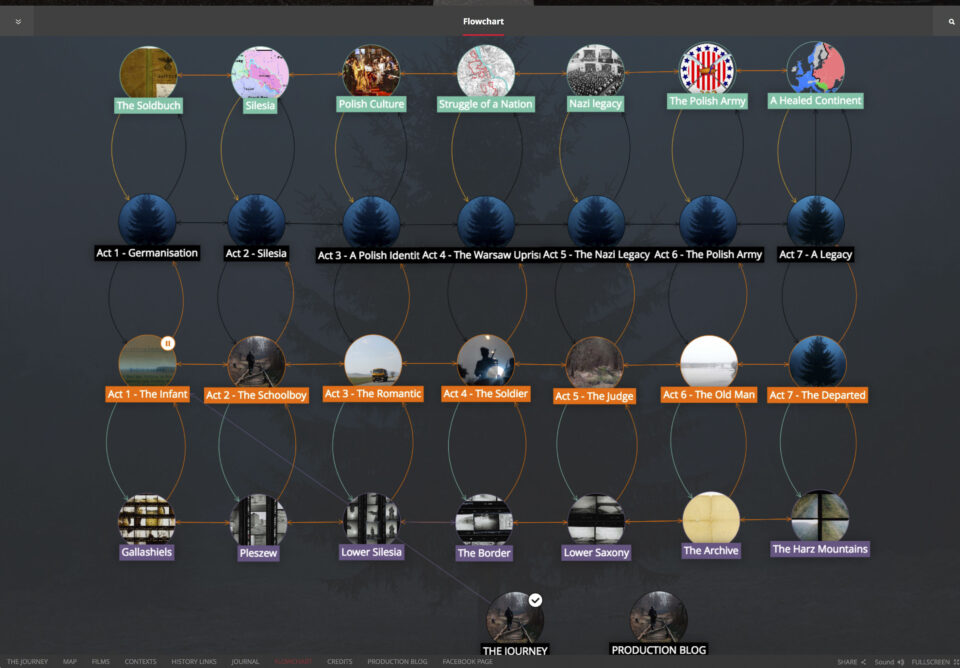
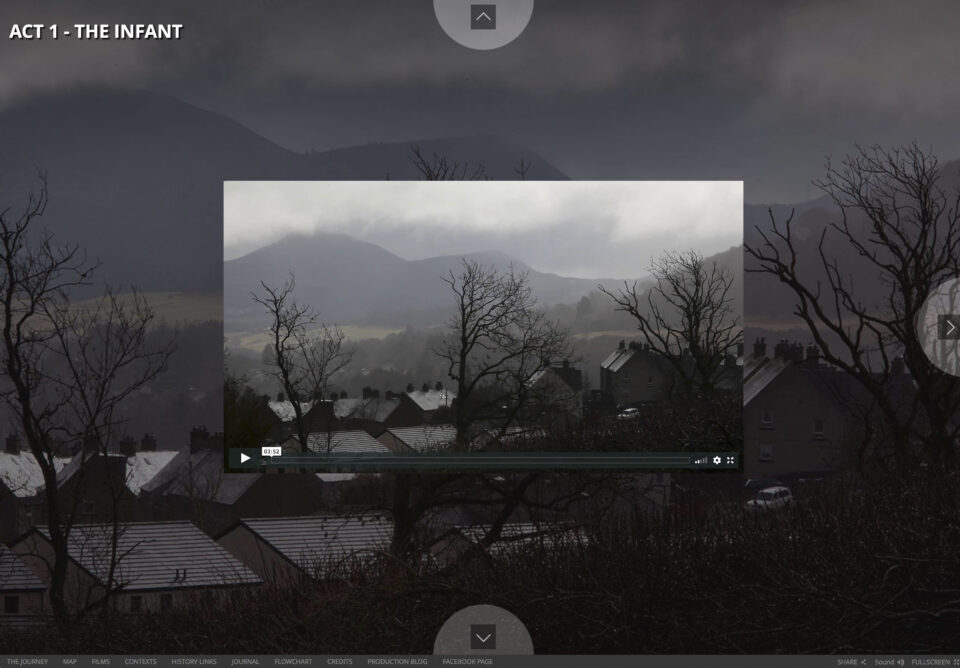
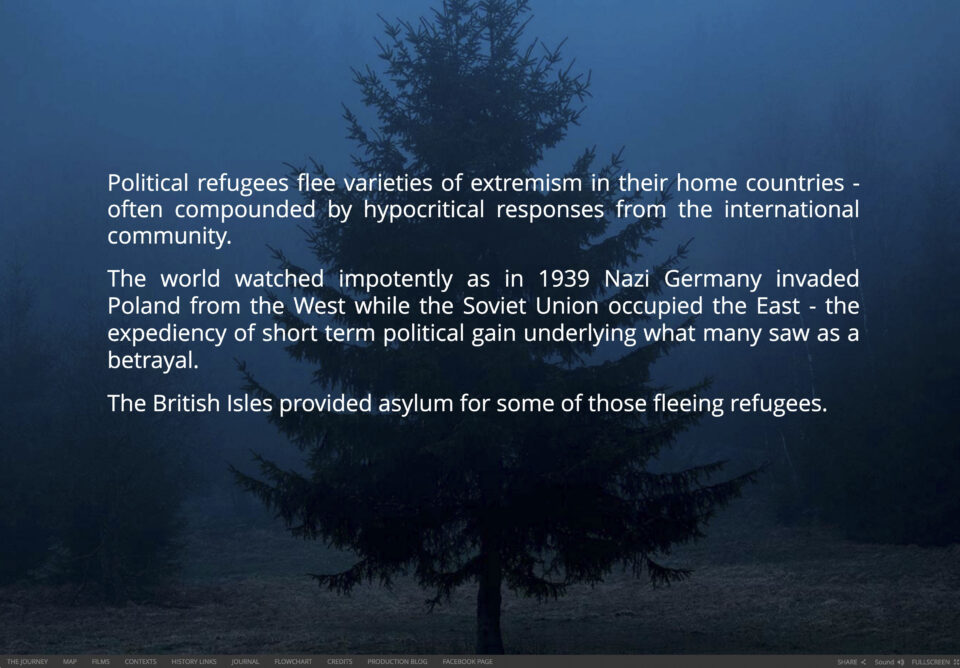
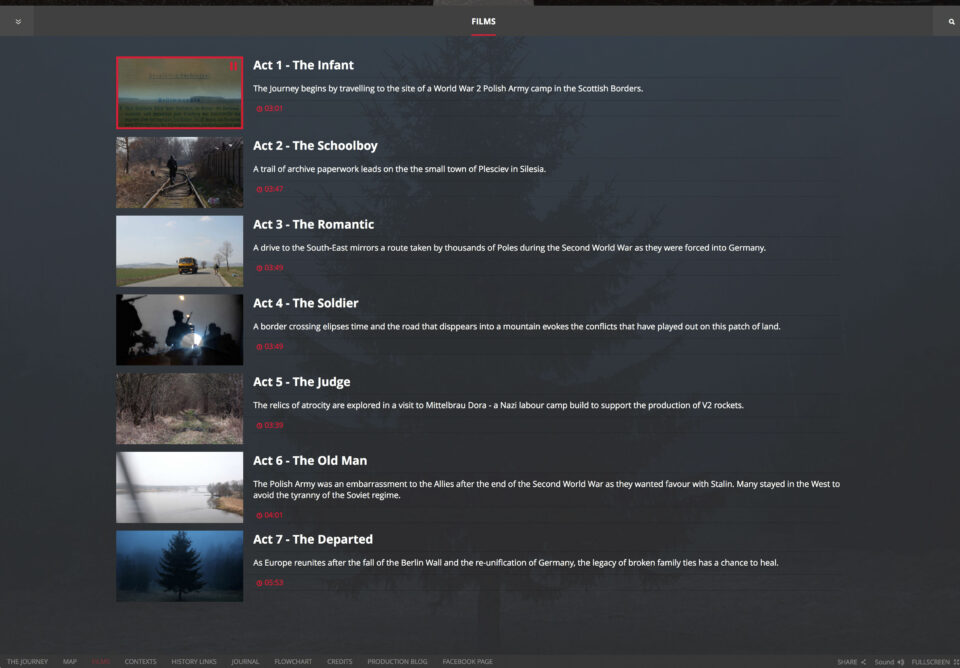
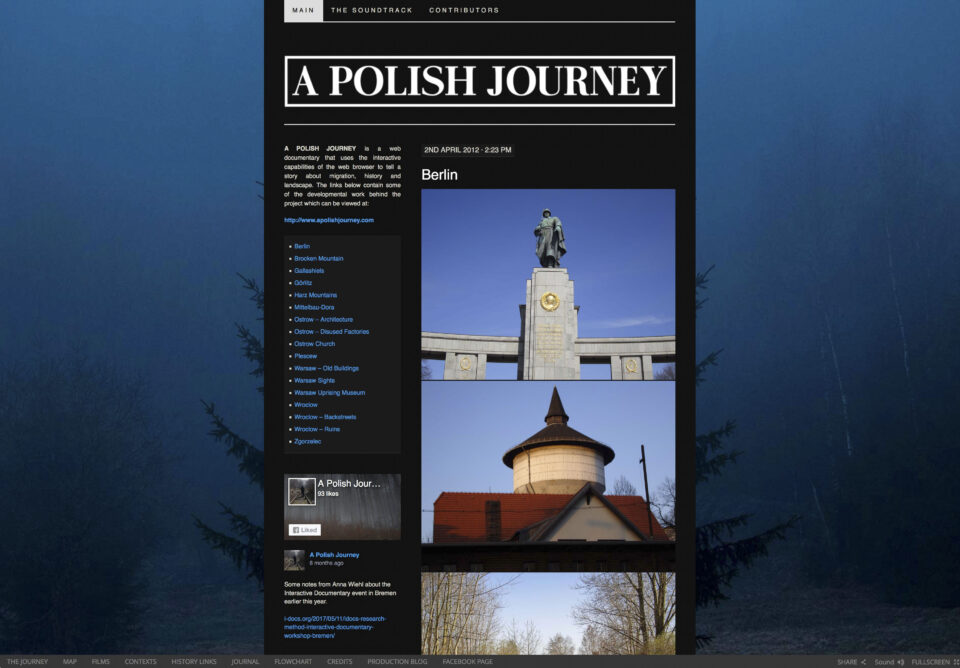
Below is a walk-through of the web documentary content:
Link to A Polish Journey web documentary (some features of the original may not be supported)