
Earth – Sound and Matter
It seems that what science realizes in the end, mysticism reaches from the beginning … man does not think about what was spoken of in the past: he thinks that what is being spoken of today is something new.
Hazrat Inayat Khan – The Mysticism of Sound and Music
Across cultures, sound vibration is placed at the centre of life; contemporary interpretations of the physical universe uncover a “God Particle” of pure vibrational energy. From the metaphorical “Big Bang” theory of creation to the Judeo-Christian ‘In the beginning there was a word, and the word was God, sound vibration guides our understanding of energy beyond our vision.
Our sense of hearing is the first to develop and last to stop functioning – this primal level nature of sound has the power to evoke pure emotion – laughter or screams can unconditionally transfer energy.
Sound Yoga (also known as Nada Yoga) practice uses sound to open and clear channels within the subtle energy body (known as the Nadis). This network of channels that connect the body’s energy centres (Chakras) can become blocked, leading to both physical and mental disease. This form of Yoga ensures a healthy flow of energy. The practices of Sound Yoga draw on a range of techniques that use vibration and sound to transform consciousness and the body, aligningthe practitioner with the primal sound current.
Water – Emotion and Mental States
Tone is almost synonymous with potency. A state of tension is also implied, as a violin string needs to be stretched and tensed in order to produce tones. Whatever is too relaxed lacks tone.
Dane Rudhyar – The Magic of Tone and the Art of Music
Energy or Prana flows through the Nadis as water flows along a stream; Sound Yoga optimises this flow of energy and, in so doing, is concerned with subtle aspects of being, such as thoughts, emotions, and states of consciousness. The yoga practitioner uses yoga techniques to reach a more balanced state of being, in which fixations in mental and emotional states are allowed to dissipate, thereby opening to a state known as Samadhi, which is itself a soundless state.
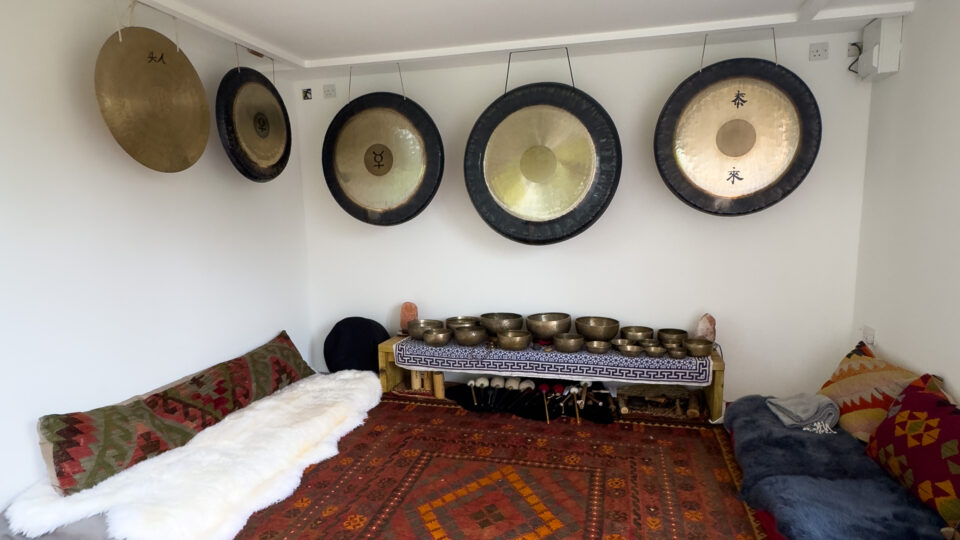
This understanding of the power of sound to transform being has its roots in shamanic and pre-musical uses of sound, and the application of pure sound and tone has profound healing and therapeutic value. By sidestepping a relationship with sound rooted in what may be described as left-brain analysis (i.e., tune and melody) and opening to pure tone, meditative and healing states can precipitate an opening of the right brain. The tools for this are varied, ranging from the human voice and instruments, but common to all is a direct engagement with tone.
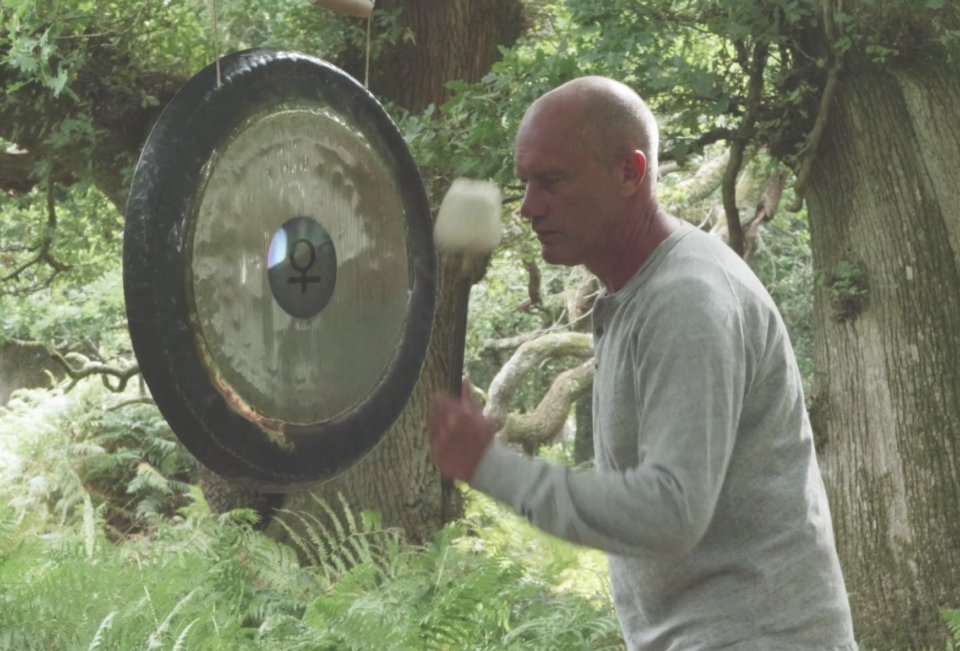
The principal healing instrument is the gong, and, like many instruments used for transformative or shamanic purposes, it produces white noise, confounding the analytic brain’s ability to structure and make sense of sound and bringing about a meditative state. The key practitioner in the use of the gong for therapeutic purposes, Yogi Bharjan – the founder of Kundalini Yoga, is often quoted as saying that “the mind has no power to resist a gong that is well played” and that the mind surrenders within 3 to 90 seconds.
The gong itself has a particular sound structure that, in some respects, can be compared to a crashing wave. However, when played well and exploratively, the sound can range from rhythmic, and therefore predictive, patterns into non-linear realms. This sound characteristic can loosen states of being and enable the breaking of destructive mental and emotional patterns. The gong has been incorporated into the practice of Kundalini yoga since the 1970’s when Yogi Bharjan successfully took esoteric practices from North India to help heal people with drug and dependency issues in the USA using Gong Yoga.
Fire – Will and Science
The sound of the gong creates deep relaxation, clears the mind, and stimulates the glandular system to a higher level of functioning. It also aids in the re-organisation of emotional energy and feelings that are tied into the body structure and consequently affect the mind.
Mehtab Benton
Western science has taken an increasing interest in the transformative power of sound; sound technologies are used in a range of applications, from medical uses, such as dissolving kidney stones, to military applications, while research has examined the nature of sound’s relationship to physiology and psychology.
The correlation of vibratory frequencies to activity in the brain was discovered by the Austrian psychiatrist Hans Berger in 1908, he observed four key groups of frequency of activity within the brain: the Alpha state that corresponded to frequencies of 8 to 12 Hz that correlate with an alert and relaxed state of mind which is both creative and productive, the Beta 13 to 39 Hz which is a normal waking state, the Theta state 3 to 7hz which is sleep and the Delta 0.5 to 2 Hz corresponding to a coma, drug overdose or near death experience. While this measures brain activity itself, an area of increasing interest is how exposure to external frequencies can affect the brain.
The science of vibration and sound reveals the phenomenon of entrainment, whereby in the physical world, rhythmic movement will, over time, fall into step, a phenomenon observed in the rooms of pendulum clocks that eventually adopt a uniform pattern. This process of entrainment can affect the human brain, enabling the frequencies first discovered by Hans Berger to change mental and emotional states. A similar process occurs within physical objects and the body, whereby vibrations transfer to other objects – this is called resonance and is acutely demonstrated in the apocryphal tale of opera singers being able to explode wine glasses with their voices!
A popular application of acoustics to alter the brain is entrainment via binaural beats. Building on ongoing research into brainwave frequency (which has evolved since Berger’s initial work over 100 years ago), techniques have been developed that work with the frequencies of sound.
In the world of musical and therapeutic instruments, the sound produced is necessarily rich and complex, to varying degrees. When a sound is made with an acoustic device, the result is a “fundamental” tone or note and a series of “partial” harmonics – it is the pattern of partials that would distinguish a piano from a violin. When tones come together, some interesting things happen – the sounds can combine to form combination tones. When two tones very close in pitch are played together, we may begin to hear a combination note that results from their difference, and this can be used to generate sounds at frequencies that align with the frequency of a meditative mind state. These combination tones are called Extremely Low Frequencies (ELF) and are considered a physiological phenomenon synthesised in the inner ear by cochlear hair cells.
Sound yoga is based on these principles: entraining the mind with sound and using resonance to affect the body, facilitating the flow of energy between the dense and the light.
Air – Transformation and Alchemy
Our breath is the most palpable link between the manifest reality of our physical existence and the unknown world of the spirit. When we observe the breath, we realize that it is not something we own, neither is it something we do. Our breathing also gives us the totality of the present moment as an eternal now.
Russill Paul
Yoga is a spiritual practice that works with our energy bodies; it incorporates techniques to enhance the flow between the dense material elements of existence and the more subtle energies of consciousness. We are not dealing with two essences that are opposed to one another but with a continuum between the slower, deeper vibration of matter and the faster, lighter vibration of spirit.
The seven main chakras, or energy points, in the body have been associated with the “scale” of elements as they ascend the spine. The element of air has the highest vibration of the visible sensory elements (earth, water, fire, air), and it is the heart chakra, the Anahata Chakra, that is of particular interest to Sound Yoga. Following the ascending scale of vibration, it is this point at which a key alchemical transformation takes place -where energy ceases to be visible.
The name Anahatta translates as the “unstruck”, as opposed to the audible “ahat” sound, which is sound vibration on the threshold of manifestation in the physical world. The esoteric practices of Nada Yoga aim to cultivate internal listening, to perceive sounds through inward, meditative attention, and to identify fundamental sounds.
A part of the preparation for this internal listening is to focus on the sounds of the natural world and the subtleties of reframing the senses to enable the perception of tone and harmony in natural sound, which facilitates an opening of one’s being.
In yoga practices such as Hatha yoga or pranayama, we employ physical and meditative techniques to transform energy, allowing lower-vibrating material energy to transform into higher-vibrating energy. We can do this in a very physical way, such as using mudras to channel energy upwards. Still, we can also focus attention on the internal vibrations of the body – the unstruck sounds of energy in the body, as well as allowing ourselves to listen to the world around us truly.
Space – Silence
In the silence, in the stillness, in the deep stillness of the heart we can find God. This is the foundation of nada yoga. Nada yoga has this philosophical aspect to its teachings and practice. It asks us to listen to that voice sounding deep within silence and to follow our conscience, or the voice of our higher Self, that is one with all.
Frank Perry
To facilitate our attunement to those inner sounds, we need to come closer to an understanding of silence, or, as Hazrat Inayat Khan describes it, the silences. By this, Khan means that silence is not simply a negative but a space imbued with its own characteristics. Silence is a canvas on which the world of sound is drawn, and while there is no such thing as pure silence, in the same way that empty space is impossible, it is something that can be achieved as a state of mind. By reaching a state of the silent mind we gain clarity of perception. This “beginner’s mind” is a state of mind that can remove judgment.
The first stage of Sound Yoga is to engage with silence – to explore the space around the sound – a little like the quote attributed to the French composer Claude Debussy, who said that music is “the space between the notes”. By harnessing our relationship with silence and, to some extent, re-finding sound, we can sensitise both to our physical environment and to ourselves. To quote George Leonard in his book The Silent Pulse, “meditation is a means for us to become more sensitive to our inner vibrations and rhythms. It mayalso be a means to facilitate entrainment, to train our vibrations so that we are more ‘in sync ‘ with our world and the people around us”
Silence during Yoga practice creates space for engagement with the most primal of rhythms: the breath. We can experience the breath as a bodily vibration and as a sound to our ears. By following the breath and even controlling it through pranayama, we can start to master our emotions. By mastering emotions, we can master the other fundamental body rhythm – the heartbeat. Both of these rhythms provide a feedback mechanism for understanding our emotional and mental states; they are also individual rhythms that entrain readily to others and to external sounds.
This element of space is associated with the Vishuddhi (throat) chakra, and the lotus of this chakra has 16 petals, which are said to represent the 16 vowels of the Sanskrit alphabet. In the Vedic system, the throat is both a space and the source for all sounds. The throat is, of course, the point of vocalisation and the breath becomes an expression of an individual’s Prana in the form of the voice – in this way it can be seen as the barometer for the human soul. The energy of vocalised sound manifests in the use of mantra (translation: “mind crossing”), the repetitive use of sound to evoke emotional states. The use of mantra chanting within a group is a highly immediate way to induce harmony or understanding.
Third Eye – Intuition
The best-known mantra is AUM (OM), which is said to be the sound of the universe itself, and practising this chant offers maximal resonance and the ability to generate overtones within the human body. It is associated with the third eye, the focus of our intuitive abilities. Taking this simple mantra as a starting point, we note that it is a seed mantra, with a single sound, rather than part of a phrase, and that it can be associated with a body part. While the external chanting of the mantra has a profound effect on the psyche and groups, the unvoiced mantra also has a deeper resonance and power, enabling mental repetition in meditation.
Leading up to the Ajna or Third Eye chakra on the forehead are seed sounds for the elements, often used in conjunction with the main lower chakras as they progress upwards.
The base chakra or Muladhara chakra is associated with earth with it’s bija mantra LAM (this is pronounced as in LUNG) the key sound being the sound of that initial L consonant such that the tongue behind the upper teeth.
The second sacral chakra, Swadhisthana, associated with water, has the bija mantra VAM (pronounced as in VUNG) with the V sound vibrating the lips as if making an FF sound.
The solar plexus, or Manipura, chakra, with the element of fire, has the sound RAM, produced by curling the tip of the tongue to the roof of the mouth.
Anahatta or the Heart chakra, with element air, has sound YAM, pronounced YUNG, with the tongue against the soft palate at the front of the mouth.
Visshuddha or throat chakra, associated with space, is the sound HAM with the HUNG sound coming from the back of the throat.
The toning of chakras and corresponding chakra points can be mapped onto the instruments and tones used in sound yoga. Some systems use the Western tempered scale as a reference for the ascending chakras from C, an effective way to demonstrate increasing pitch/vibration. It is, however, often helpful to work with tonal variation across more than one octave, as a C that genuinely resonates with the base chakra would necessarily be deep and earthy!
Spirit – Meditation and the Divine
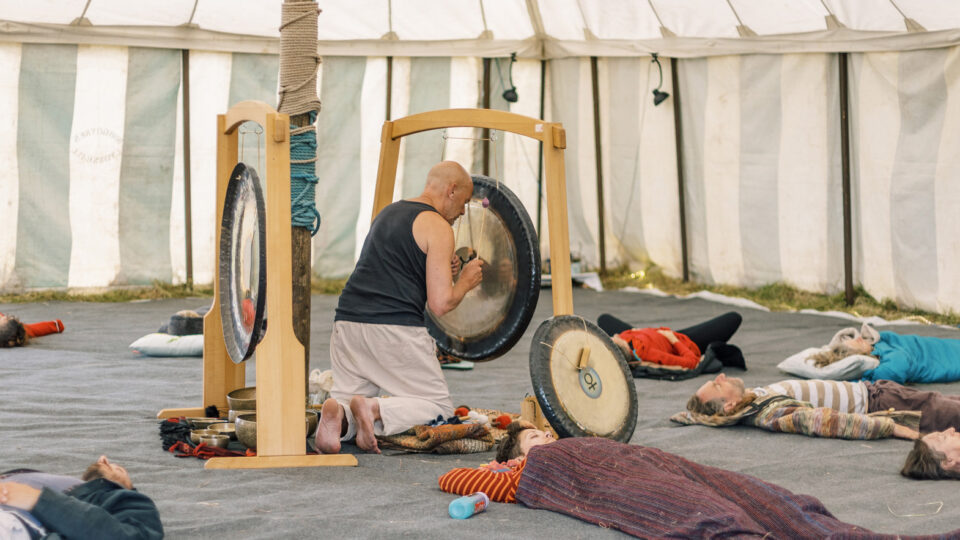
We can return to the study of the gong to understand how the various processes involved in Sound Yoga may be integrated and experienced in dynamic yoga practice, as well as in meditation and relaxation.
Kundalini Yoga maps the subtle energy body onto the surface of the gong. If, first of all, we imagine the gong as a giant sun, we may envisage it as having a hot core of energy at the centre, with the periphery vibrating faster and being more mutable. We can view the centre of the gong as the heart chakra, with the three lower chakras descending and the highest, the Sahasrara, at the top.
In yogic practice, we seek the energy to move toward the highest level, but we also need to be aware that, for that to happen, blocks lower down must be addressed. This chakra model, coupled with the direction of the mallet strike, allows us to direct energy up and down, grounding or elevating. Whether used in a dynamic or meditative setting, the gong is important for facilitating the flow of energy.
This effect of the resonance of the gong can be understood in terms of the yogic modelling of the energy body – the Koshas. The energy body is layered within the physical/Annamaya Kosha, the energetic/Pranamaya Kosha, the emotional/Manamaya Kosha, the cognitive/Vijnanamaya Kosha, and the Blissful/Anandamaya Kosha. Sound Yoga is a profoundly effective tool for enhancing the asanas, pranayamas and mudras associated with activating and integrating these energy bodies.
The association of sound with yogic practice can be particular to the practice, such that speed, rhythm and volume of gong play can be used to enhance a specific asana or even to skillfully allow energy to prepare the transformation between langhana asanas, which have a cooling and relaxing effect on the body and brimhanaasanas which are warm and activating.
Sound Yoga follows the path of all Yoga; it offers a route to experience an integrated self, a sense of oneness that, for some, may be something akin to Samadhi or self-realisation. The incorporation of sound in this journey is profoundly influential, as it uses pure vibrational energy to directly break down negative patterns, open the flow of energy for relaxation and meditation, and create a whole and healing space.
Bibliography
James D’Angelo PhD., 2012. Seed Sounds for Tuning the Chakras: Vowels, Consonants, and Syllables for Spiritual Transformation. Pap/Com Edition. Destiny Books.
Mehtab Benton, 2013. Gong Yoga. Revised 2013 Edition. Bookshelf Press.
Joachim-Ernst Berendt, 1991. The World Is Sound: Nada Brahma: Music and the Landscape of Consciousness. New Edition of Nada Brahma: The World Is Sound: Music and the Landscape of Consciousness Edition. Destiny Books.
Hazrat Inayat Khan, 1996. The Mysticism of Sound and Music (Shambhala Dragon Editions). Revised Edition. Shambhala.
George Leonard, 1977. The Silent Pulse: A Search for the Perfect Rhythm that Exists in Each of Us. Revise & Updated Edition. Gibbs Smith.
Russill Paul, 2006. The Yoga of Sound: Tapping the Hidden Power of Music and Chant. 2nd Edition. New World Library.
Frank Perry, 2014. Himalayan Sound Revelations: The Complete Tibetan Singing Bowl Book. 1st Edition. Polair Publishing.
Dane Rudhyar, 1982. The Magic of Tone and the Art of Music. 1st Edition. Shambhala.